The Digital Parts Trail: How AI Inventory Systems Are Transforming Vessel Management in 2026
Learn how AI-powered parts inventory systems are transforming vessel management. Track every component, predict restocking needs, and never leave the dock without critical spares again.
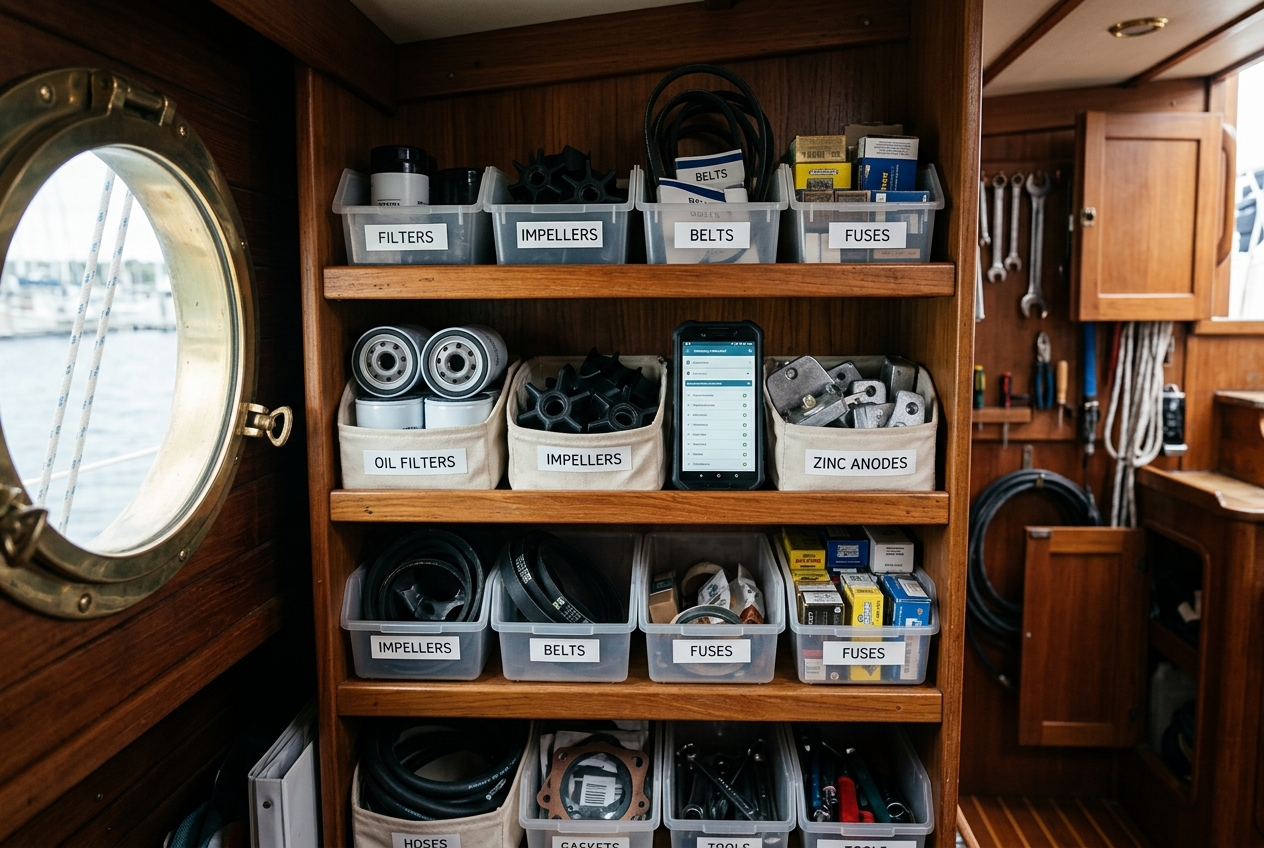
The $20 Part That Costs $20,000
Every experienced boat owner has heard the story, or lived it. A raw water impeller fails forty miles offshore. The replacement is a $20 part that takes ten minutes to install. But there is no spare on board, and the engine overheats before the vessel can limp back to port. The resulting damage to the heat exchanger, head gasket, and cylinder walls turns a minor maintenance item into a five-figure repair.
The problem was never the impeller. The problem was not knowing it needed to be on board.
This scenario repeats itself across thousands of vessels every season with different parts but the same root cause: inventory managed by memory, scattered receipts, and best intentions. In 2026, AI-driven inventory systems are replacing that guesswork with precision.
Why Marine Inventory Is Uniquely Difficult
A typical cruising vessel carries hundreds of individual components across dozens of systems. Engine spares, electrical fuses, plumbing fittings, safety equipment, galley supplies, cleaning products, and specialized tools all compete for limited storage space in lockers, bilge compartments, and lazarettes spread across the boat.
The challenges compound quickly:
- Volume and variety. A single engine has filters, belts, impellers, zincs, gaskets, and fluids that all operate on different replacement cycles.
- Storage fragmentation. Parts are distributed across the vessel in locations that made sense at the time but are difficult to remember months later.
- Irregular usage patterns. A boat might sit for weeks, then run hard for a weekend, making traditional time-based restocking unreliable.
- Long lead times. Marine-specific parts often require days or weeks to ship, especially to remote cruising destinations. Running out at the wrong time means waiting in port or improvising.
- Expiration dates. Safety equipment, adhesives, flares, and certain fluids expire and become useless or non-compliant if not tracked.
Paper lists and spreadsheets address none of these challenges well. They require manual discipline that erodes over time, and they provide no intelligence about when action is needed.
What a Digital Parts Trail Actually Looks Like
A digital parts trail is a living record of every component on your vessel: what you have, where it is stored, when it was purchased, what it cost, and when it will need attention next. Unlike a static list, it is connected to your maintenance schedule and usage data, creating a system that thinks ahead on your behalf.
Here is what modern AI-powered inventory management provides:
Location Mapping
Knowing a spare impeller is "somewhere on the boat" is not helpful when the engine is overheating. A digital system tracks the specific locker, bin, or compartment where each part is stored. When you need something urgently, you search once and go directly to it.
Usage-Based Predictions
By connecting parts inventory to engine hours, service logs, and maintenance schedules, the system can predict when specific items will be needed. If your oil filter is due every 100 hours and you are at 85, the system knows to verify you have a replacement on board before your next trip.
Automated Restock Alerts
When stock levels hit a minimum threshold, you receive an alert. For items with long shipping times, these alerts fire early enough to order and receive the part before you actually need it. No more discovering the gap at the worst possible moment.
Cost Tracking and Budgeting
Every part logged includes purchase price and date. Over time, this builds a comprehensive picture of maintenance spending per system, per season, and per engine hour. Fleet operators and charter companies use this data for accurate budgeting and identifying which systems are costing disproportionately.
Receipt and Photo Documentation
Each inventory entry can include scanned receipts, photos of the part and its storage location, and notes about compatibility or installation details. When you sell the vessel, this documentation is part of the value proposition for buyers.
The Safety Compliance Connection
Inventory tracking becomes critical when applied to safety equipment. Flares expire 42 months from manufacture. Fire extinguishers have a 12-year service life. Life raft inspections are due annually. EPIRBs require battery replacement on schedule.
An AI inventory system does not just record these items; it monitors their timelines and flags them before they lapse. This is not about passing a USCG inspection (though it ensures that too). It is about guaranteeing that every piece of safety gear on board will actually function in an emergency.
Bosun's Mate (https://bosunsmate.app) integrates parts inventory directly with safety compliance tracking. When you log a set of flares, the system automatically calculates the expiry date and begins its alert countdown. When you add a fire extinguisher, it tracks the 12-year service life from manufacture date. No separate checklist required.
From Reactive to Predictive
The fundamental shift that AI inventory systems represent is the move from reactive to predictive vessel management. The old model: something breaks or expires, you discover the gap, you scramble to source a replacement. The new model: the system identifies what will be needed, when, and alerts you with enough lead time to act calmly.
This is particularly valuable for owners who:
- Cruise remotely where marine chandleries are days away.
- Charter their vessel and need to guarantee readiness between bookings.
- Own multiple boats and cannot personally inspect every locker before each trip.
- Are new to boating and have not yet built the mental model of what spares to carry.
The system learns from your usage patterns and maintenance history. The more data it has, the more accurately it predicts future needs.
Building Your Digital Parts Trail
Starting a digital parts trail does not require a full vessel audit on day one. The most practical approach:
- Start with safety equipment. Log your flares, extinguishers, PFDs, and any dated safety gear. These have the most critical timelines.
- Add engine spares. Filters, belts, impellers, zincs, and fluids. These are the items most likely to strand you if missing.
- Log as you go. Every time you purchase or use a part, add it to the system. Within a season, you will have comprehensive coverage without a dedicated inventory day.
- Attach receipts. Use AI-powered receipt scanning to capture purchase data automatically. One photo, and the part name, price, and date are extracted and logged.
Bosun's Mate (https://bosunsmate.app) makes this process take under a minute per item. The AI receipt scanner handles the data entry so you can focus on the work, not the paperwork.
The Resale Value of a Complete Parts History
A vessel with a documented parts trail is worth more at resale. Buyers can see exactly what spares convey with the sale, when critical components were last replaced, and what the maintenance spending history looks like. It removes uncertainty and justifies a higher asking price.
Combined with a full digital maintenance log (covered in our first article on the Vessel Carfax concept), a parts inventory creates a comprehensive ownership record that no paper system can match.
The Bottom Line
The $20 impeller story does not have to be yours. A digital parts trail ensures that every critical spare is tracked, located, and monitored. It turns inventory management from a chore you forget about into an automated system that works quietly in the background and speaks up only when you need to act.
Start building your vessel's digital parts trail for free at https://bosunsmate.app. Log your first parts today, and never leave the dock wondering what you forgot again.