The True Cost of Neglect: Why Data-Driven Engine Maintenance is the Future of Vessel Ownership
Learn why reactive marine maintenance is costing you thousands and how data-driven logging with Bosun's Mate can increase your vessel's resale value by 10-15%.
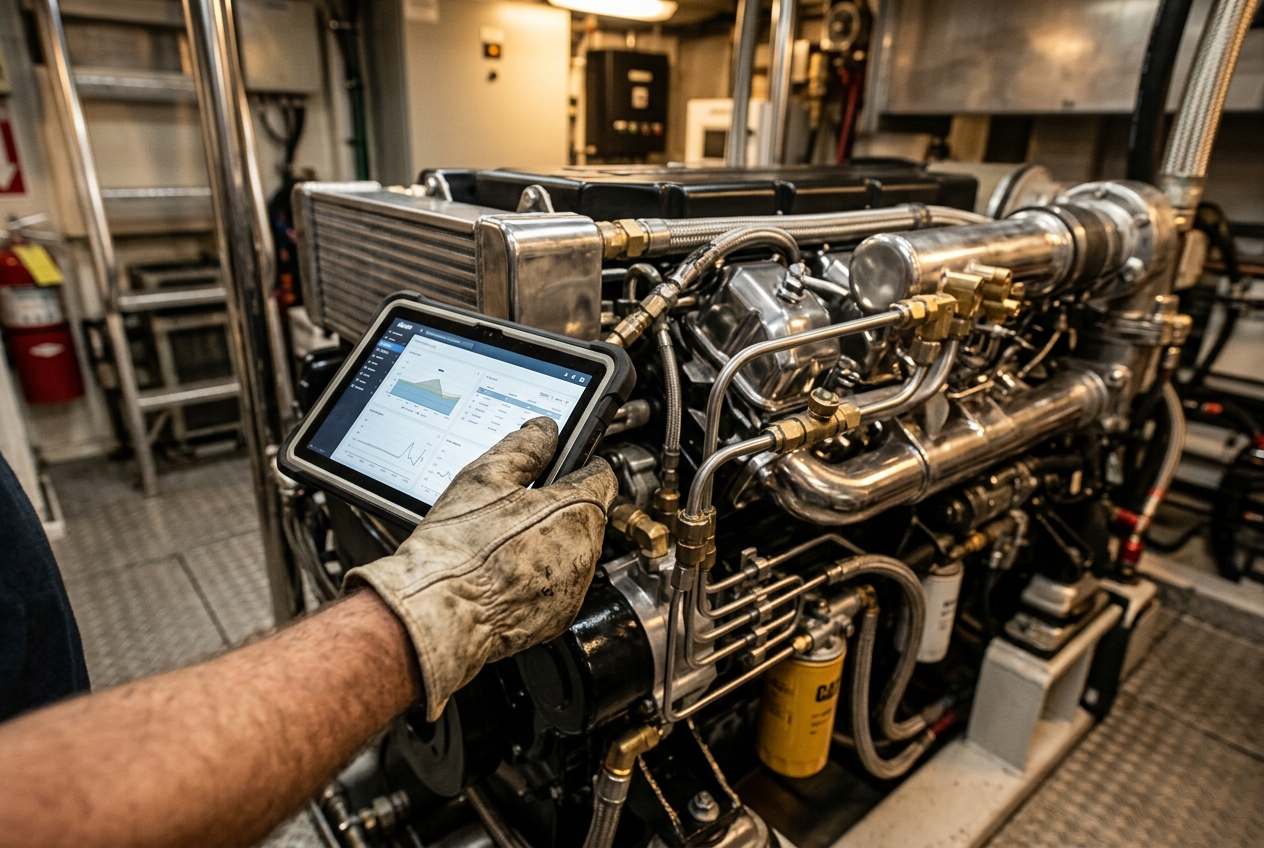
For vessel owners, the engine room is the heart of every journey. Whether cruising the Great Loop, navigating coastal waters, or managing a commercial fleet, the reliability of a marine propulsion system is the thin line between a successful voyage and a costly, potentially dangerous breakdown. Yet, for decades, marine maintenance has relied on a reactive model: "if it isn't broken, don't fix it." In 2026, this approach is not only obsolete but financially irresponsible. The emergence of data-driven vessel management platforms like Bosun's Mate is shifting the paradigm from reactive repairs to predictive performance, fundamentally changing the ROI of boat ownership.
The Hidden Costs of Reactive Maintenance
Reactive maintenance — the practice of only addressing mechanical issues after they manifest as failures — carries a heavy price tag that extends far beyond the mechanic's invoice. In the marine environment, small oversights can rapidly escalate into catastrophic failures. A minor salt-water leak in a heat exchanger, if left undetected, can lead to severe engine overheating, warped cylinder heads, and eventually, a total engine rebuild.
The financial impact of this "neglect tax" is multi-faceted:
- Emergency Repair Premiums: When an engine fails at the dock or, worse, at sea, the cost of labor increases significantly. Emergency haul-outs, rush-shipping for parts, and the premium rates charged by mobile mechanics for immediate response can double or triple the cost of a standard service.
- Collateral Damage: Mechanical systems are interconnected. A worn impeller doesn't just fail; it causes the entire cooling system to lose pressure, which can damage exhaust risers, turbos, and internal seals. By the time the failure is "noticed," the repair scope has expanded exponentially.
- Opportunity Cost: For many owners, the greatest cost is the lost time. A vessel stuck in the yard for three weeks during peak season represents thousands of dollars in lost recreational value or commercial revenue.
The Shift to Data-Driven Maintenance
Predictive maintenance is the practice of using real-time and historical data to forecast when a component is likely to fail or requires service. For a modern vessel, this means moving beyond the physical logbook and into a centralized digital ecosystem. By tracking engine hours, service intervals, and component lifespans with precision, owners can transition to a proactive schedule that aligns with manufacturer recommendations and real-world usage patterns.
1. Engine Hours and Precision Interval Tracking
The most basic yet critical metric for marine maintenance is the engine hour. However, tracking these hours manually is prone to error. Digital logs allow for the seamless recording of every hour run, enabling the system to trigger alerts for 50-hour oil changes, 250-hour valve adjustments, and 1,000-hour cooling system overhauls. When data is logged consistently, the "guessing game" of when the last service occurred is eliminated, ensuring that critical fluids and filters are replaced at their peak efficacy.
2. Digital Parts Cataloging and Inventory Management
One of the most common delays in marine maintenance is the "parts hunt." Knowing exactly which Racor fuel filter or Cummins impeller your specific engine model requires is often a hurdle. Data-driven platforms allow owners to store a digital inventory of every part number associated with their vessel. By maintaining a digital chandlery, owners can receive automated reminders to restock critical spares before a scheduled maintenance window, ensuring that a $20 filter doesn't cause a $2,000 delay.
3. Service History as a Diagnostic Tool
A digital maintenance log is more than just a record of spend; it is a diagnostic tool. If an engine is requiring oil changes more frequently than the manufacturer suggests, or if a specific belt is wearing out prematurely, the historical data will highlight these trends. This allows owners and technicians to investigate underlying issues — such as pulley misalignment or blow-by — before they lead to a total system failure.
The Resale Value Component
In the current marine market, transparency is currency. When it comes time to sell a vessel, a potential buyer's greatest fear is the "black box" of the engine room. A thick binder of disorganized, oil-stained paper receipts is no longer sufficient to command a premium price.
A comprehensive, digital service history provides a level of professional transparency that directly translates to higher resale value. A "Vessel Health Report" generated from a platform like Bosun's Mate proves to the surveyor and the buyer that the vessel has been managed with professional-grade rigor. It eliminates the "negotiation gap" where buyers demand deep discounts to cover the perceived risk of unknown maintenance issues. In many cases, a well-documented maintenance history can add 10-15% to the final sale price of a vessel.
Compliance and Safety: The Invisible Benefits
While the financial benefits of data-driven maintenance are clear, the safety implications are paramount. The U.S. Coast Guard (USCG) and other regulatory bodies emphasize the importance of vessel readiness. A vessel with a documented maintenance history is inherently a safer vessel.
Systems that track the expiry of safety equipment — such as fire extinguishers and flares — alongside engine maintenance ensure that the vessel remains compliant with USCG standards at all times. This digital oversight reduces the risk of fines during boardings and, more importantly, ensures that life-saving equipment functions correctly in an emergency.
Implementing a Data-First Strategy
Transitioning to a data-driven model does not require a degree in marine engineering. It requires a commitment to consistent logging. The modern vessel owner should:
- Digitize Immediately: Stop relying on memory or paper logs. Every oil change, zinc replacement, and fuel fill-up should be logged in a centralized digital platform.
- Leverage AI for Parts: Use mobile scanning tools to capture part numbers and receipts instantly, building a searchable database of the vessel's mechanical DNA.
- Set Hard Alerts: Configure the system to provide push notifications 10 hours before a major service interval is due. This provides the necessary lead time to order parts and schedule a technician.
Conclusion: Investing in Reliability
In 2026, the technology exists to make marine engine failure a rare exception rather than an expected part of boat ownership. By adopting a data-driven approach to maintenance, vessel owners can drastically reduce repair costs, increase their vessel's market value, and ensure the safety of their crew. The "True Cost of Neglect" is a bill that no captain should have to pay. With the right digital tools, the heart of the vessel can beat reliably for decades to come.