USCG Boating Safety Compliance: A Complete Checklist for Vessel Owners in 2026
A complete USCG boating safety compliance checklist for 2026. Learn fire extinguisher service life, flare expiry rules, PFD requirements by vessel length, and how to track it all digitally.
Why USCG Compliance Is Not Optional
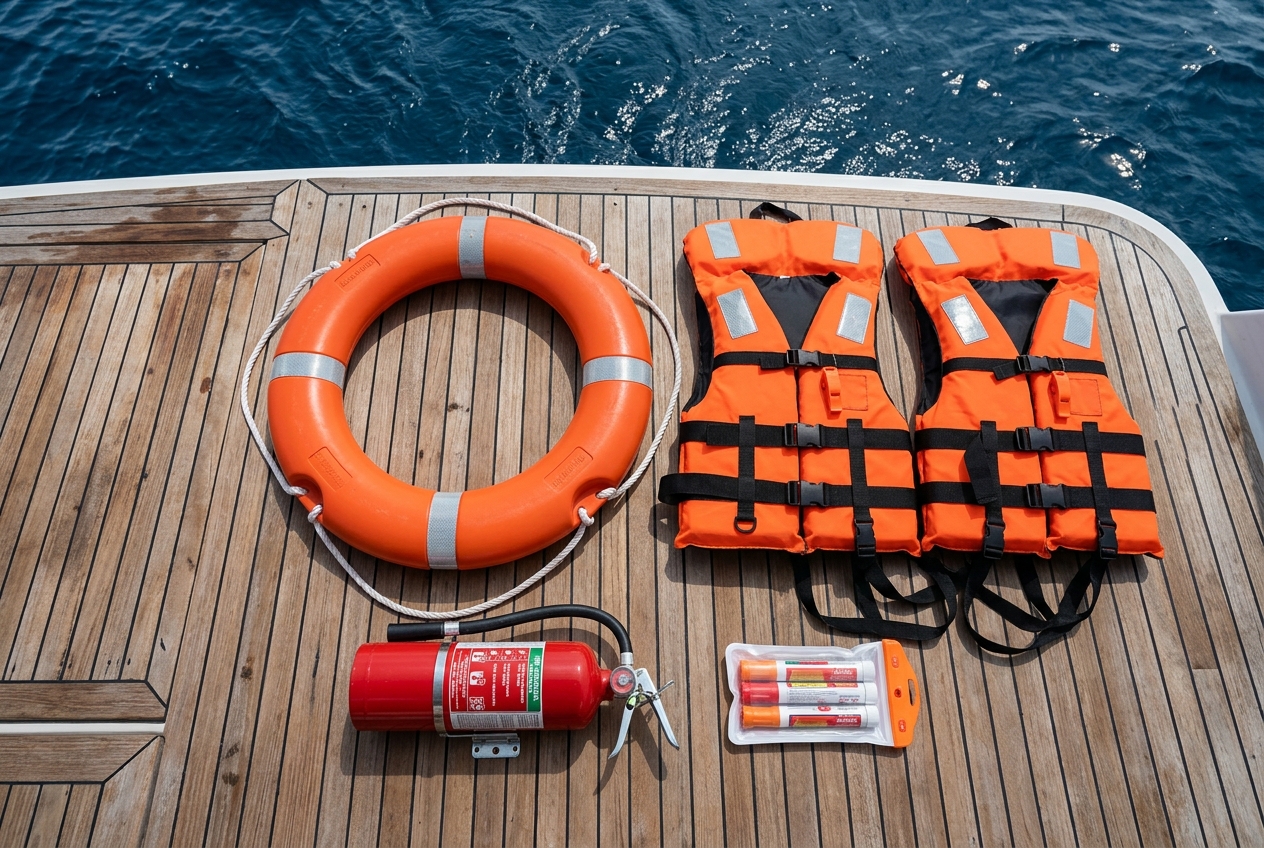
Every recreational vessel operating in US waters is subject to United States Coast Guard safety equipment requirements. These are not suggestions. A USCG boarding that reveals expired flares, missing fire extinguishers, or insufficient PFDs results in a Notification of Unsafe Condition, and in serious cases, your vessel can be terminated from further operation on the spot.
The challenge for most boat owners is not willingness to comply. It is keeping track of what expires, what has aged out of service life, and what the minimums are for your specific vessel. Paper checklists get lost. Mental notes get forgotten between seasons. And the regulations themselves are not always intuitive.
This guide breaks down exactly what you need, when things expire, and how to stay ahead of compliance year-round.
Fire Extinguishers: The 12-Year Rule
The USCG updated portable fire extinguisher requirements in April 2022 (Final Rule 46 CFR 25.05). The key changes every owner should know:
Service Life: Portable marine fire extinguishers now have a hard 12-year service life from the date of manufacture. After 12 years, the extinguisher must be replaced regardless of condition or charge indicator.
Where to Find the Date: The manufacture date is stamped on the bottom of the cylinder or printed on the label. If you cannot locate a date, the extinguisher must be replaced.
Minimums by Vessel Length:
- Under 16 feet: One 5-B rated extinguisher (if the vessel has enclosed compartments where fuel vapors could be trapped)
- 16 to under 26 feet: One 5-B rated extinguisher
- 26 to under 40 feet: Two 5-B rated extinguishers, or one 20-B rated extinguisher
- 40 to 65 feet: Three 5-B rated extinguishers, or one 20-B plus one 5-B rated extinguisher
Pro Tip: The old "B-I" and "B-II" classifications are being phased out. Look for the UL rating (5-B, 10-B, 20-B) on any extinguisher manufactured after 2018. Older extinguishers with B-I or B-II ratings remain acceptable until they reach their 12-year service life.
Visual Distress Signals (Flares): The 42-Month Window
Pyrotechnic visual distress signals (flares) have a marked expiration date, typically 42 months from the date of manufacture. This is not a soft guideline. Expired flares do not count toward your required minimum during a USCG inspection.
Who Needs Them: All vessels operating on coastal waters, the Great Lakes, territorial seas, or the high seas must carry visual distress signals. Vessels under 16 feet operating on inland waters during daylight are generally exempt.
Minimum Requirement: Three unexpired pyrotechnic devices. These can be any combination of handheld flares, aerial flares, or parachute flares, provided they are USCG-approved and within date.
The Common Mistake: Many owners purchase a three-pack of flares and forget about them until the next haulout. By then, they have often expired. The 42-month window means flares purchased in spring 2026 will expire in late 2029, not "a few years from now."
Non-Pyrotechnic Alternative: An electric SOS distress light (meeting the requirements of 46 CFR 161.013) can replace pyrotechnic signals for daytime and nighttime use. These do not expire but must be functional and carry current batteries.
Personal Flotation Devices: One Per Person, Plus a Throwable
PFD requirements are straightforward but frequently violated through simple neglect:
The Rule: One USCG-approved wearable PFD for every person on board. Children under 13 must wear theirs while underway (in most states). Wearable PFDs must be the appropriate size for the intended wearer.
The Throwable: Vessels 16 feet and longer must also carry one Type IV throwable device (a life ring or throwable cushion) that is immediately accessible. "Immediately accessible" means not buried in a locker under the V-berth.
Condition Matters: PFDs with ripped fabric, broken buckles, or degraded flotation material will not pass inspection. The USCG inspector will physically examine them. If you would not trust it in an emergency, replace it.
The Overlooked Items
Beyond the big three (extinguishers, flares, PFDs), several other requirements catch owners off guard during boardings:
- Navigation Lights: Must be functional and meet COLREGS specifications. A burned-out stern light is a citation.
- Sound-Producing Device: Vessels under 39.4 feet need a whistle or horn. Vessels 39.4 feet and over need both a whistle and a bell.
- Backfire Flame Arrestor: Required on all gasoline inboard engines. Must be clean and securely attached.
- Ventilation: Vessels with enclosed fuel compartments must have functioning ventilation (powered blower for gasoline engines built after 1980).
How to Never Miss an Expiry Again
The most common compliance failure is not ignorance of the rules. It is forgetting when items expire and discovering the gap at the worst possible moment, either during a USCG boarding or during an actual emergency.
Digital tracking solves this permanently. Bosun's Mate (https://bosunsmate.app) includes a dedicated Safety Compliance tab on your vessel dashboard that:
- Tracks flare expiry dates with automatic alerts 30 days before expiration.
- Monitors fire extinguisher service life based on manufacture date, flagging the 12-year replacement window.
- Logs PFD inventory by type and quantity so you always know your count before guests board.
- Shows USCG minimums for your specific vessel length, so you never have to look up the table again.
- Generates dashboard alerts that surface on your main vessel overview when any safety item is approaching expiry or overdue.
No spreadsheet. No sticky note on the helm. Just accurate, automatic reminders tied to actual regulatory timelines.
The Bottom Line
USCG compliance is not complicated, but it demands attention to dates and quantities that are easy to lose track of across a busy boating season. The owners who pass every boarding without stress are not the ones who memorize the CFR. They are the ones who built a system to track it for them.
Set up your vessel's safety compliance tracking for free at https://bosunsmate.app. Log your extinguisher dates, flare purchase dates, and PFD counts once, and let the system alert you before anything lapses.